
ICU Nursing Jobs in Australia: Skills, Requirements and Career Opportunities
Sep 18 , 2026
Call us 24/7 on
1300 10 50 10Follow us:


Call us 24/7 on
1300 10 50 10Follow us:
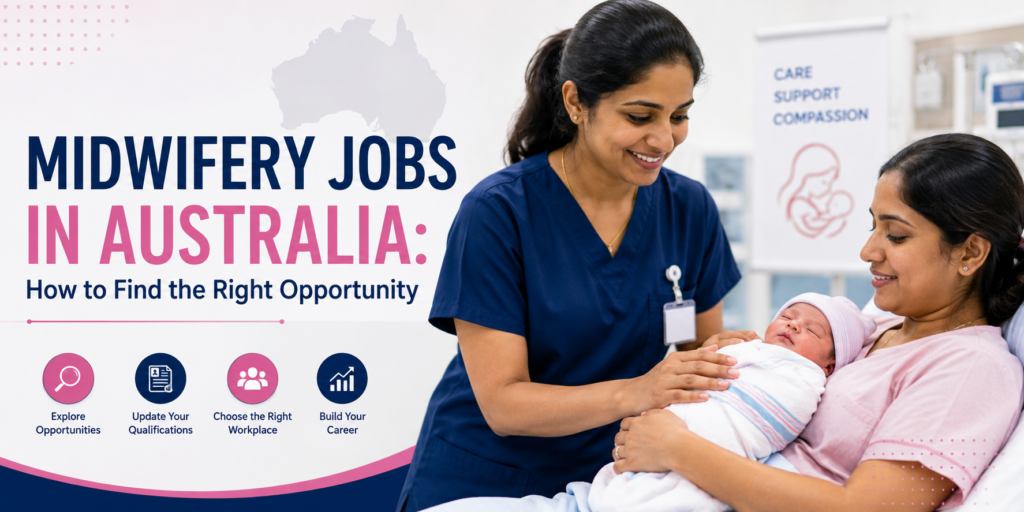
Midwifery is a rewarding career that offers opportunities to make a meaningful difference in the lives of women, babies and families. Across Australia, midwives are in demand in hospitals, maternity units, community health services, regional facilities and private healthcare settings.
Whether you are a newly qualified midwife looking for your first role or an experienced professional considering a change, finding the right midwifery job involves more than simply looking at the salary. Workplace culture, location, flexibility, professional development and career opportunities can all influence whether a position is the right fit.
Before applying for jobs, it is useful to understand the different types of roles available to midwives in Australia.
Midwives may work in:
Each environment can offer a different experience. For example, hospital-based positions may provide exposure to a wide range of maternity cases, while community roles can offer greater continuity of care for women throughout pregnancy, birth and the postnatal period.
Before applying for midwifery jobs, make sure your registration and professional requirements are up to date.
Midwives practising in Australia generally need to meet the registration requirements of the Australian Health Practitioner Regulation Agency (Ahpra) and the Nursing and Midwifery Board of Australia (NMBA).
Depending on the position and employer, you may also need to provide evidence of relevant qualifications, professional experience, immunisation records, mandatory training and other employment checks.
Having your documentation organised can make the application process much easier, particularly when applying for multiple positions.
Location is an important factor when choosing a midwifery opportunity.
Major cities can provide access to large hospitals, specialist maternity services and a broad range of career pathways. However, regional and rural Australia can also provide excellent opportunities for midwives.
Regional roles may offer:
Think about whether you want to work close to home, relocate temporarily or explore opportunities in another part of Australia.
Not every midwife wants the same working arrangement.
Permanent employment can provide stability, predictable benefits and opportunities to build a long-term career within one organisation. Casual or agency work, on the other hand, may provide greater flexibility.
Contract midwifery jobs can also be appealing if you enjoy travelling or want to gain experience in different healthcare facilities.
Before accepting a role, consider your preferred working hours, shift requirements, contract length and availability.
Salary is important, but it should not be the only consideration when comparing midwifery jobs.
A position with a slightly higher salary may not necessarily be the best opportunity if it involves an unsuitable roster, long travel times or limited support.
Consider the complete employment package, including:
Looking at the overall package can help you make a more informed decision.
Before accepting a midwifery position, take some time to learn about the employer and workplace.
Research the organisation’s reputation, maternity services, workplace environment and opportunities for professional development. If possible, ask questions about staffing, orientation, clinical support and expectations for the role.
You can also use an interview to determine whether the organisation’s values and working environment match your own professional goals.
The right midwifery job should ideally support your long-term career goals.
Consider whether the employer provides opportunities for further education, training, mentoring and career progression.
Experienced midwives may be interested in leadership, education, management or specialist pathways, while newly qualified midwives may prioritise structured support and opportunities to build confidence and clinical experience.
Choosing a role that supports your professional development can help you build a stronger and more rewarding career.
Finding suitable midwifery positions can take time, particularly if you are looking for a specific location, roster or employment arrangement.
A healthcare recruitment agency can help connect qualified midwives with available opportunities that match their experience and preferences.
Agencies may have access to temporary, casual, contract and permanent positions across different healthcare facilities. They can also help streamline parts of the recruitment process and provide information about available roles.
This can be particularly useful for midwives who want flexibility or are interested in exploring opportunities outside their usual workplace.
Your CV is one of the first things an employer or recruitment consultant will review.
Make sure your CV clearly highlights your:
Keep the information clear and easy to read. Focus on experience that is relevant to the position you are applying for.
Before accepting an opportunity, make sure you understand what the position involves.
Useful questions may include:
Getting clear answers before accepting a position can help prevent surprises later.
There is no single “best” midwifery job for everyone. The right opportunity depends on your experience, lifestyle, career goals, preferred location and desired level of flexibility.
Take the time to compare different roles rather than accepting the first available position. Consider the employer, workplace environment, employment conditions, professional development opportunities and overall benefits.
If you are looking for midwifery jobs in Australia, working with an experienced healthcare recruitment provider can make the process easier and help you discover opportunities that align with your career goals.
Medical Staff can help qualified healthcare professionals explore suitable employment opportunities across Australia. Whether you are looking for a permanent position, flexible agency work or a contract opportunity, our team can help connect you with roles that match your experience, availability and career objectives.
If you are ready to take the next step in your midwifery career, contact Medical Staff today to discuss available opportunities and find a role that is right for you.

Follow us: