
ICU Nursing Jobs in Australia: Skills, Requirements and Career Opportunities
Sep 18 , 2026
Call us 24/7 on
1300 10 50 10Follow us:


Call us 24/7 on
1300 10 50 10Follow us:
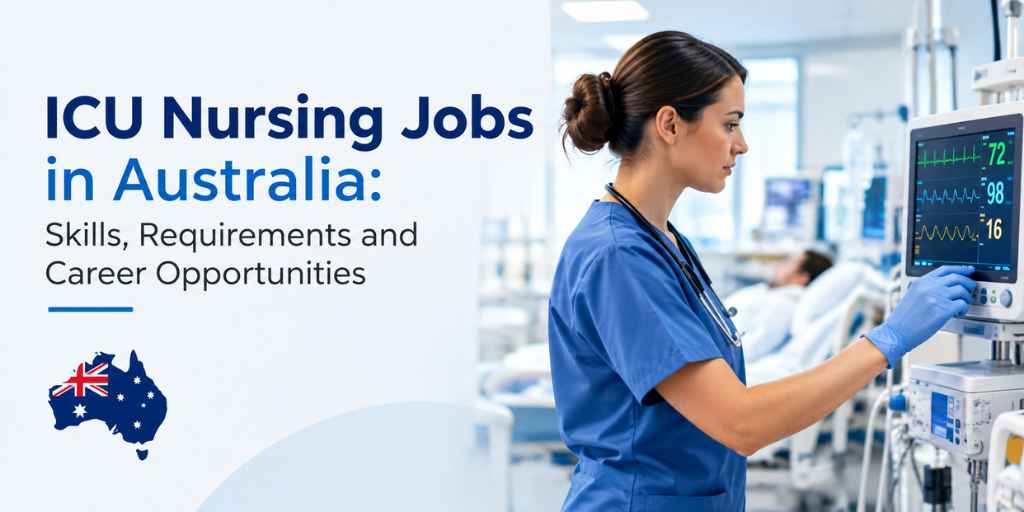
Australia offers a range of career opportunities for nurses specialising in intensive care. Intensive Care Unit (ICU) nurses play a vital role in caring for critically ill patients who require continuous monitoring, advanced clinical support and specialised treatment.
For nurses considering working in Australia, ICU nursing can provide opportunities to develop clinical expertise, gain experience in different healthcare settings and pursue long-term professional development.
However, working as an ICU nurse in Australia requires appropriate nursing registration, relevant clinical skills and, depending on the position, specialised experience or postgraduate qualifications.
This guide explains the skills, requirements, job opportunities and career pathways for ICU nurses interested in working in Australia.
An ICU nurse provides specialised care to patients experiencing serious illnesses, major injuries or complications following surgery. These patients often require close observation and advanced medical support.
Typical ICU nursing responsibilities include:
ICU nurses work in a demanding environment where clinical judgement, attention to detail and effective communication are essential.
Nurses interested in ICU positions need to understand the professional registration and employment requirements before applying.
To practise as a registered nurse in Australia, you must hold registration with the Nursing and Midwifery Board of Australia (NMBA), through the Australian Health Practitioner Regulation Agency (Ahpra).
Internationally qualified nurses must meet the applicable registration requirements. These may include assessment of qualifications, English language proficiency, professional history, identity and other relevant criteria.
Having nursing registration in another country does not automatically provide Australian registration.
Applicants should check the current Ahpra and NMBA requirements to determine the appropriate registration pathway for their circumstances.
Many ICU positions require previous experience in intensive care or another relevant acute clinical setting.
Employers may consider your experience with critically ill patients, advanced monitoring, emergency situations and specialised equipment.
The level of experience required varies by employer and position.
Some ICU nursing roles may prefer or require postgraduate qualifications in intensive care nursing or a related specialty.
A relevant postgraduate certificate or other recognised training may support professional development and demonstrate specialised knowledge.
Always check the individual job advertisement to understand the qualification requirements.
ICU nursing requires a combination of technical knowledge, clinical judgement and interpersonal skills.
Employers may also look for adaptability, attention to detail and a commitment to ongoing learning.
ICU nurses can explore opportunities across different healthcare settings, depending on their experience and registration.
Public hospitals provide intensive care services for patients with serious medical conditions, injuries and complex surgical needs. Opportunities vary by hospital and location.
Private healthcare providers may recruit nurses for intensive care and other specialised clinical departments, depending on their services and staffing requirements.
Nurses willing to consider locations outside major cities can explore regional healthcare opportunities. Requirements and available positions differ between facilities.
Preparing a strong application can help employers understand your clinical background and suitability for a position.
Always provide accurate information about your registration and employment history.
ICU nursing can offer several directions for career development as nurses gain experience and additional qualifications.
Potential career pathways include:
The availability of these opportunities depends on the employer, experience, qualifications and relevant role requirements.
Ongoing professional development can help ICU nurses maintain their knowledge, strengthen clinical skills and prepare for future responsibilities.
Healthcare recruitment agencies can be another option for nurses searching for suitable employment.
Recruiters may help candidates identify vacancies, understand employer requirements and navigate the application process. Some agencies recruit for permanent, temporary or contract positions, depending on their services.
Before applying, clarify the job location, employment arrangements, registration requirements, shift expectations and any conditions relevant to your visa or work rights.
International nurses should also confirm that their registration and visa status permit them to undertake the proposed role.
ICU nursing offers opportunities for registered nurses who want to work in a specialised clinical environment and develop their intensive care experience.
Understanding Australian nursing registration, gaining relevant clinical experience, preparing a professional CV and researching suitable employers are important steps when exploring opportunities.
Whether you are an experienced ICU nurse or an internationally qualified nurse planning to work in Australia, make sure you understand the registration and employment requirements that apply to your circumstances.
Medical Staff supports healthcare recruitment across Australia. Nurses interested in exploring employment opportunities can learn more about its recruitment services and available roles.
Visit Medical Staff to explore opportunities that may match your experience and career goals.
Website: https://www.medicalstaff.com.au/

Follow us: