
What’s Required to Work With a Nursing Agency?
Jul 25 , 2026
Call us 24/7 on
1300 10 50 10Follow us:


Call us 24/7 on
1300 10 50 10Follow us:
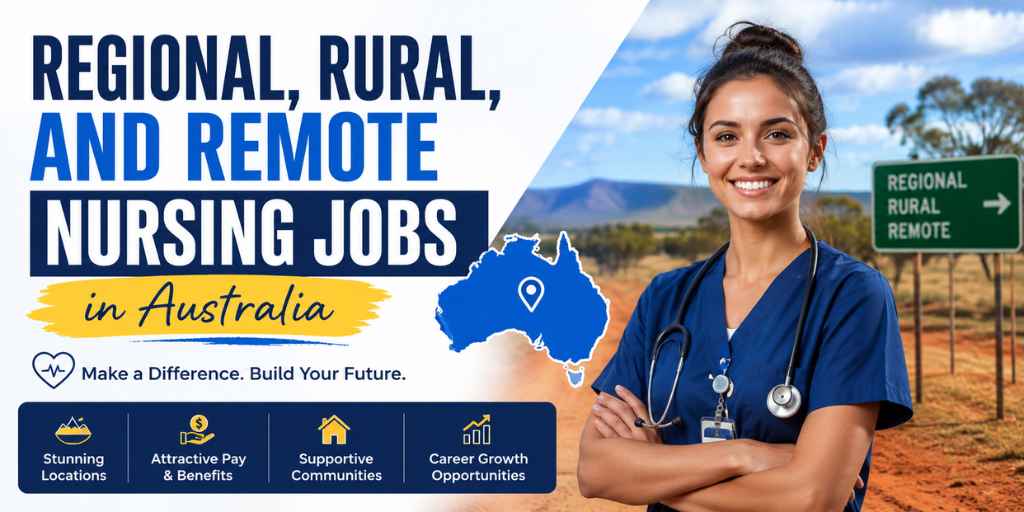
Australia offers countless nursing opportunities beyond its major cities. While many healthcare professionals build successful careers in metropolitan hospitals, regional, rural, and remote nursing jobs provide equally rewarding experiences. These roles allow nurses to develop diverse clinical skills, enjoy greater career flexibility, and make a meaningful difference in communities where healthcare professionals are in high demand.
Although the terms regional, rural, and remote are often used interchangeably, they describe different locations and healthcare environments. Understanding the differences can help you choose the nursing career that best matches your professional goals and lifestyle.
Australia’s population is spread across vast geographical areas. While major cities have large hospitals and specialist services, many smaller communities depend on local healthcare facilities for everyday medical care.
Nurses working outside metropolitan areas play a vital role by:
As a result, healthcare providers across Australia actively recruit qualified nurses for these locations.
Regional nursing involves working in larger towns and smaller cities outside Australia’s major metropolitan centres. These locations generally have larger populations and more developed healthcare systems than rural or remote communities.
Regional healthcare facilities may include:
Regional hospitals often provide access to specialist doctors, diagnostic imaging, surgical services, maternity care, and emergency departments.
Regional nurses usually work within multidisciplinary healthcare teams while caring for a wide variety of patients.
Common nursing specialties include:
Although workloads can be busy, regional facilities generally offer more resources than smaller rural hospitals.
Working in a regional area offers many advantages, including:
For many nurses, regional nursing provides an excellent balance between professional growth and lifestyle.
Rural nursing takes place in smaller towns with fewer healthcare resources. Rural hospitals and clinics often serve several surrounding communities.
Unlike metropolitan nursing, rural nurses frequently care for patients across multiple clinical areas during the same shift.
A rural nurse may provide:
Because healthcare teams are smaller, rural nurses often work with greater independence and broader responsibilities.
Successful rural nurses are typically:
The variety of cases makes rural nursing both challenging and professionally rewarding.
Many nurses enjoy rural practice because it offers:
Many employers also provide accommodation assistance and relocation support.
Remote nursing involves working in isolated communities located hundreds of kilometres from major hospitals.
These communities may include:
Healthcare access is often limited. Therefore, remote nurses play a critical role in delivering essential healthcare services.
Remote nurses manage a wide variety of clinical situations, including:
In many remote locations, nurses work alongside general practitioners, Aboriginal Health Workers, and visiting specialists.
Some remote nurses may also assist with emergency evacuations when patients require specialist hospital care.
Remote nursing requires confidence, resilience, and advanced clinical judgement.
Important skills include:
Because specialist support may not always be immediately available, remote nurses often work with a high level of autonomy.
Although remote nursing presents unique challenges, it also offers exceptional rewards.
Benefits often include:
Many nurses describe remote work as one of the most rewarding experiences of their careers.
The best choice depends on your career goals, confidence, and preferred lifestyle.
Regional nursing may suit you if you want:
Rural nursing may be ideal if you enjoy:
Remote nursing may be the perfect fit if you are looking for:
Each pathway provides valuable professional experience while helping improve healthcare access across Australia.
Whether you’re seeking opportunities in regional hospitals, rural health services, or remote communities, nursing outside metropolitan areas offers outstanding career growth and personal satisfaction. These roles allow you to expand your skills, experience diverse clinical settings, and positively impact communities that rely on dedicated healthcare professionals.
At Medical Staff, we connect registered nurses, enrolled nurses, and aged care professionals with rewarding nursing opportunities across regional, rural, and remote Australia. Whether you’re looking for short-term agency shifts, travel nursing contracts, or permanent positions, our experienced recruitment team can help you find a role that matches your skills and career goals.
Contact Medical Staff today and discover your next nursing opportunity across Australia.
Follow us: