
What’s Required to Work With a Nursing Agency?
Jul 25 , 2026
Call us 24/7 on
1300 10 50 10Follow us:


Call us 24/7 on
1300 10 50 10Follow us:
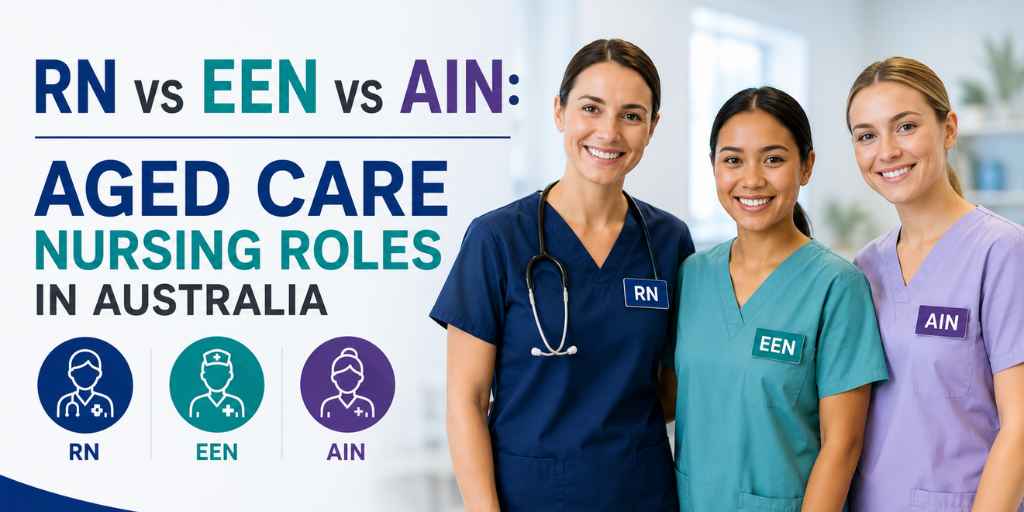
Australia’s aged care sector offers rewarding career opportunities for healthcare professionals at different qualification levels. Whether you’re considering a career in aged care or looking to understand the differences between a Registered Nurse (RN), Enrolled Nurse (EEN), and Assistant in Nursing (AIN), knowing each role’s responsibilities, qualifications, and career pathways can help you make an informed decision.
Although all three positions work together to provide high-quality care for older Australians, their scope of practice, education requirements, and responsibilities differ significantly.
This guide explains the key differences between RN, EEN, and AIN roles in Australia’s aged care industry.
Australia’s ageing population continues to drive demand for skilled healthcare workers. Residential aged care facilities, home care providers, and retirement communities require qualified professionals to deliver compassionate, person-centred care.
Working in aged care offers:
Whether you’re entering healthcare for the first time or advancing your nursing career, aged care provides numerous pathways.
A Registered Nurse (RN) is the highest qualified nursing professional among the three roles. RNs are responsible for clinical leadership, comprehensive patient assessments, care planning, medication management, and supervising other nursing staff.
To become an RN in Australia, you must complete:
Registered Nurses in aged care typically:
An RN role is ideal for those who enjoy leadership, clinical decision-making, and managing complex healthcare needs.
An Enrolled Nurse (also called an EN) works under the supervision of a Registered Nurse while providing direct nursing care to residents.
EENs have more clinical responsibilities than AINs but less autonomy than Registered Nurses.
To become an EEN, you typically complete:
An Enrolled Nurse may:
EENs play a vital role in delivering day-to-day clinical care while working closely with Registered Nurses.
An Assistant in Nursing provides essential personal care and daily living support to aged care residents.
AINs spend the most time with residents and are often the first to notice changes in a person’s health or wellbeing.
While requirements vary by employer, many AINs complete:
Some employers also provide on-the-job training.
AINs commonly assist residents with:
AINs report any concerns to Enrolled Nurses or Registered Nurses.
Qualification: Bachelor of Nursing
Registration: Required with NMBA
Primary Focus: Clinical leadership and comprehensive nursing care
Can Administer Medication? Yes
Can Develop Care Plans? Yes
Can Supervise Staff? Yes
Qualification: Diploma of Nursing
Registration: Required with NMBA
Primary Focus: Clinical care under RN supervision
Can Administer Medication? Yes (if endorsed)
Can Develop Care Plans? Assists with implementation
Can Supervise Staff? Sometimes, depending on workplace policies
Qualification: Certificate III (commonly)
Registration: Not required
Primary Focus: Personal care and daily living support
Can Administer Medication? Usually no
Can Develop Care Plans? No
Can Supervise Staff? No
Generally, salaries reflect each role’s qualifications and responsibilities.
Salary levels vary depending on location, employer, experience, shift penalties, and weekend work.
One of the advantages of working in aged care is the ability to progress your career.
Many healthcare professionals follow this pathway:
Assistant in Nursing (AIN) → Enrolled Nurse (EEN) → Registered Nurse (RN)
Each step opens new responsibilities, increased earning potential, and greater career opportunities.
Many employers support staff through professional development and further education.
Regardless of your role, employers value healthcare professionals who demonstrate:
Building these skills can improve your career prospects and help you deliver exceptional care.
Your ideal role depends on your qualifications, career goals, and preferred level of responsibility.
Choose an AIN role if you want to start working quickly in aged care and gain valuable hands-on experience.
An EEN role is suitable if you want greater clinical responsibilities while working as part of a nursing team.
An RN career is the best choice for those seeking leadership opportunities, advanced clinical practice, and long-term career growth.
Registered Nurses, Enrolled Nurses, and Assistants in Nursing all play essential roles in Australia’s aged care system. While their responsibilities differ, they work together to ensure older Australians receive safe, compassionate, and high-quality care.
Whether you’re beginning your healthcare journey or planning your next career move, aged care offers stable employment, rewarding work, and excellent opportunities for professional development.
Looking for your next opportunity in aged care? Medical Staff connects Registered Nurses, Enrolled Nurses, and Assistants in Nursing with trusted aged care providers, hospitals, and healthcare facilities across Australia.
Whether you’re seeking permanent employment, agency shifts, or flexible contracts, our experienced recruitment team is here to help you find a role that matches your skills, experience, and lifestyle.
Contact Medical Staff today and take the next step towards a rewarding career in Australia’s growing aged care sector.

Follow us: