
How to Become an Agency Nurse in Victoria, Australia
Nov 13 , 2026
Call us 24/7 on
1300 10 50 10Follow us:


Call us 24/7 on
1300 10 50 10Follow us:
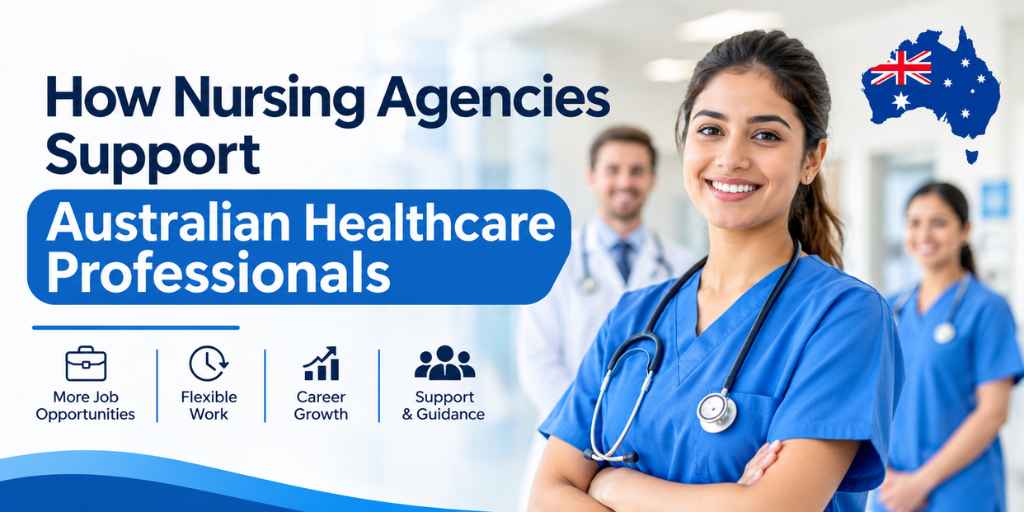
Australia’s healthcare sector relies on skilled and dedicated nursing professionals to provide quality patient care across hospitals, aged care facilities, community health centres and other medical settings. However, finding suitable employment, managing work schedules and accessing professional development opportunities can sometimes be challenging for nurses.
This is where nursing agencies play an important role. Nursing agencies help connect qualified nurses with healthcare facilities that require skilled staff. They also support nurses by offering flexible working arrangements, access to different workplaces and assistance throughout the recruitment process.
Whether you are a registered nurse, enrolled nurse or an experienced healthcare professional, working with a nursing agency can open up various career opportunities across Australia.
A nursing agency is a recruitment and staffing organisation that connects qualified nursing professionals with healthcare providers looking for temporary, contract or permanent staff.
Hospitals, aged care facilities, disability support services and community healthcare organisations often experience changing staffing requirements. Nursing agencies help these organisations find suitable professionals to maintain safe and consistent patient care.
For nurses, agencies provide access to employment opportunities that may not always be advertised through traditional recruitment channels.
Some nursing agencies also specialise in particular healthcare sectors, such as aged care, mental health, emergency nursing, community care and regional healthcare services.
One of the biggest advantages of working with a nursing agency is access to a wider range of employment opportunities.
Instead of searching for vacancies individually, nurses can connect with recruiters who understand their qualifications, experience and career preferences.
Agencies may offer opportunities across:
This allows nursing professionals to explore different workplaces and find roles that suit their experience and career goals.
Many healthcare professionals prefer flexibility when managing their personal and professional responsibilities.
Nursing agencies often provide casual shifts, short-term contracts and longer-term placements. This can help nurses choose work arrangements that suit their availability.
For example, a nurse who prefers weekend shifts may find suitable opportunities through an agency, while another professional may prefer full-time contract placements.
Flexible scheduling can also be useful for nurses who want to balance family responsibilities, further education or other commitments.
However, shift availability and flexibility depend on the agency, healthcare provider and employment arrangement.
Finding the right nursing position involves more than submitting a resume. Healthcare employers generally assess qualifications, professional registration, clinical experience and other employment requirements.
Nursing agencies help simplify this process by assisting candidates with recruitment and placement.
Their support may include:
This guidance can make the job search process more organised and efficient.
Working through a nursing agency can expose healthcare professionals to different clinical environments.
For example, a registered nurse may gain experience working in hospitals, aged care facilities and community healthcare settings.
These experiences can help nurses develop practical skills, improve their adaptability and understand different patient care requirements.
Working in different environments may also help professionals identify their preferred area of nursing and explore future career pathways.
Regional and rural communities across Australia sometimes experience difficulties attracting and retaining healthcare professionals.
Nursing agencies help address staffing requirements by connecting qualified nurses with healthcare facilities outside major metropolitan areas.
These placements can provide valuable professional experience while allowing nurses to contribute to communities that need additional healthcare support.
Depending on the placement, opportunities may be available in regional hospitals, aged care facilities and community health services.
Some positions may also offer additional employment benefits or incentives, depending on the employer and location.
Working as a nurse in Australia involves meeting specific professional and workplace requirements.
For example, registered and enrolled nurses must maintain appropriate registration with the Nursing and Midwifery Board of Australia through the Australian Health Practitioner Regulation Agency (Ahpra).
Depending on the role, agencies may also help candidates understand documentation requirements, including:
Requirements vary depending on the healthcare facility, role and state or territory.
Nursing agencies can also help professionals explore different career opportunities and build their experience.
Working across different facilities may expose nurses to new clinical practices, patient populations and healthcare teams.
This experience can help professionals strengthen their communication, teamwork, clinical knowledge and problem-solving skills.
Some agencies may also provide access to training resources, professional development opportunities or mandatory workplace education.
Nurses should discuss available development opportunities with their agency to understand what support is offered.
Not every nursing agency offers the same services, employment conditions or placement opportunities. Before registering, nursing professionals should consider a few important factors.
Taking time to compare agencies can help you find a recruitment partner that understands your career goals.
Nursing agencies play an important role in supporting Australia’s healthcare workforce. By connecting qualified professionals with healthcare facilities, they help nurses access employment opportunities, enjoy greater flexibility and gain experience across different clinical environments.
Whether you are looking for casual nursing shifts, a long-term contract or opportunities in regional Australia, a nursing agency can help you explore suitable positions.
Choosing an agency that understands your qualifications, availability and career objectives can make a positive difference to your professional journey.
Yes. Registered nurses can work through nursing agencies, provided they meet the relevant registration, qualification and employment requirements.
Many nursing agencies offer casual shifts, temporary placements and contract opportunities. Availability depends on the agency and healthcare provider.
Yes. Some agencies recruit nurses for regional and rural healthcare facilities where additional staffing support is required.
Registered and enrolled nurses generally need appropriate registration with Ahpra before practising in Australia. Specific requirements depend on the role and professional category.
Some agencies consider newly qualified nurses, while others require previous clinical experience. Applicants should check individual agency requirements before registering.

Follow us: